Palworld TCG & OCG Deck Building Guide: Free Strategies for Winning
Estimated Read Time: 7 minutes Difficulty Level: IntermediateTable of Contents
- Introduction to Deck Building in Palworld TCG/OCG
- Understanding Core Deck Components
- The Card Ratio Sweet Spot: Pals, Skills, & Items
- Identifying Your Deck's Win Condition
- Exploring Common Deck Archetypes (Aggro, Control, Combo)
- Building Synergy and Consistency
- Resource Management and Energy Curves
- Testing and Refinement: Evolving Your Deck
- Advanced Deck Building Tips
- Frequently Asked Questions About Palworld Deck Building
Introduction to Deck Building in Palworld TCG/OCG
Welcome, future Palworld champion! The world of Palworld isn't just about catching Pals; it's also about mastering the strategic depth of its trading card game (TCG) or official card game (OCG). Just like in the digital realm, building a powerful team (or in this case, a powerful deck) is crucial for victory. This comprehensive guide will equip you with the free strategies and foundational knowledge you need to construct winning Palworld TCG/OCG decks, whether you're battling friends or competing in tournaments.
Deck building is an art and a science, combining creativity with analytical thinking. It's about more than just collecting rare cards; it's about understanding how each card interacts with others, anticipating your opponent's moves, and executing a coherent strategy. By the end of this guide, you'll be well on your way to crafting decks that truly reflect your playstyle and dominate the arena.
Understanding Core Deck Components
Every Palworld TCG/OCG deck is a carefully assembled collection of cards designed to achieve a specific goal. While the exact card types might vary slightly between specific sets or rulesets, most TCGs revolve around a few core categories. For Palworld, imagine these fundamental components:
- Pal Cards: These are the heart of your deck. Pal cards represent the creatures you deploy to battle, each with unique stats, elemental types, abilities, and attacks. Think about their elemental matchups (Fire, Water, Grass, Electric, etc.), their HP, attack power, and any special passive or active skills they possess.
- Skill Cards (Trainer/Supporter Equivalent): These cards provide tactical advantages, allowing you to search your deck, draw more cards, boost your Pals' stats, or disrupt your opponent's strategy. They are crucial for maintaining momentum and responding to threats.
- Item Cards (Equipment/Tool Equivalent): Item cards are often attached to Pals or played for immediate effects, offering temporary or permanent buffs, healing, or utility. They can turn the tide of battle by enhancing a key Pal or neutralizing an opponent's advantage.
- Stage/Location Cards: These cards represent various environments or structures that affect all players or specific Pals on the field, altering rules, providing bonuses, or imposing penalties. Strategically playing a Stage card can dramatically shift the game's tempo.
- Energy/Resource Cards: While specific mechanics may differ, all TCGs require some form of resource to play cards or activate abilities. In Palworld, this might involve elemental energies matching your Pals' types, or a generic resource pool. Proper resource management is key.
The Card Ratio Sweet Spot: Pals, Skills, & Items
One of the most common questions in deck building is, "What's the right balance?" While there's no single perfect answer, general guidelines help ensure your deck runs smoothly and consistently. A typical Palworld TCG/OCG deck might consist of 60 cards, though this can vary. Here's a suggested starting point for card ratios:
- Pals (20-25 cards): You need enough Pals to establish a presence on the field and adapt to different situations. Aim for a mix of basic Pals (those you can play directly) and their evolved forms if the game has evolution mechanics. Consider a few powerful "finisher" Pals alongside more versatile utility Pals.
- Skill Cards (15-20 cards): These are your consistency engine. Include cards that help you draw, search for specific Pals or other cards, or accelerate your resources. Don't skimp on these; they ensure you find the cards you need when you need them.
- Item Cards (10-15 cards): These provide utility and reactive plays. Include items that support your main strategy, like damage boosters for your aggressive Pals, healing for your tanks, or disruption tools against problematic opposing Pals.
- Stage/Location Cards (2-4 cards): Only include these if they significantly benefit your strategy or severely hinder your opponent. Too many can be clunky, but a well-timed Stage can be game-changing.
- Energy/Resource Cards (12-18 cards): The number of energy cards depends heavily on your Pals' energy costs. If your deck focuses on high-cost, powerful Pals, you'll need more energy acceleration and a higher count. For lower-cost, aggressive decks, fewer might suffice. Always ensure you have enough to consistently power your attacks and abilities.
Remember, these are starting points. Your final ratios will be fine-tuned based on your chosen strategy and playtesting results.
Identifying Your Deck's Win Condition
Before you even pick your first card, ask yourself: "How does this deck win?" Every successful deck has a clear win condition – the primary strategy or combo that leads to victory. Without one, your deck will be a collection of good cards without a purpose. Common win conditions include:
- Knocking Out Opponent's Pals: The most straightforward. Your deck focuses on dealing high damage quickly to clear your opponent's side of the field and claim victory prizes.
- Resource Depletion: Aiming to run your opponent out of cards in their deck (deck out) or forcing them to concede by denying them resources or viable plays.
- Specific Combo Execution: Assembling a particular set of cards that, when played together, create an overwhelming or immediate game-ending effect.
- Board Control: Establishing a dominant board state with resilient Pals and denying your opponent opportunities to set up their own powerful plays.
Your entire deck – every Pal, Skill, and Item – should contribute to achieving this win condition. If a card doesn't support it, it probably doesn't belong in your deck.
Exploring Common Deck Archetypes (Aggro, Control, Combo)
Understanding popular deck archetypes will help you classify your own creations and anticipate your opponents. Most decks fall into one of these broad categories:
- Aggro (Aggressive): Focuses on speed and overwhelming damage. Aggro decks aim to deploy low-cost, high-damage Pals quickly and finish the game before the opponent can set up. They prioritize direct damage, Pal removal, and swift victories.
- Control: Emphasizes disrupting the opponent's strategy, managing the board, and grinding out a win in the late game. Control decks often feature Pals with defensive abilities, strong disruption Skill cards, healing, and ways to deny opponent resources.
- Combo: Built around a specific, powerful combination of cards that, when assembled, can lead to an immediate or highly advantageous win. Combo decks often use many search and draw cards to quickly find their key pieces. They can be fragile but incredibly potent when executed.
- Midrange: A hybrid approach that aims to curve out efficiently, playing strong Pals in the early and mid-game, while also having answers for the late game. Midrange decks are versatile and can adapt to different matchups.
Consider which playstyle resonates most with you and design your deck around its core principles.
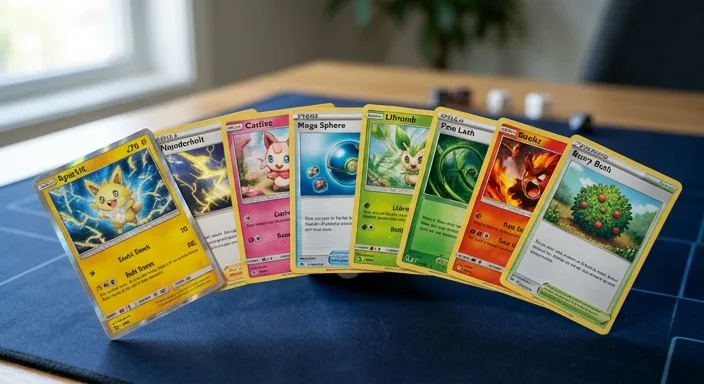
Building Synergy and Consistency
A deck filled with individually strong cards won't necessarily win. True power comes from synergy – how well your cards work together – and consistency – your ability to reliably execute your strategy.
- Synergy: Look for cards that enhance each other. Does a certain Pal's ability boost the attack of another? Does an Item card make a specific Pal's skill even more devastating? Do your Skill cards help you find the Pals you need for your win condition? Build around these interactions. For example, a deck focused on Fire Pals might include Skill cards that specifically buff Fire-type attacks or accelerate Fire energy.
- Consistency: This is achieved through careful card choices and appropriate ratios. Include multiple copies of essential cards (up to the game's limit, usually 4 per card). Utilize search and draw cards to dig through your deck for key pieces. Minimize "dead draws" – cards that are useless in most situations.
A consistent deck means you'll more often draw playable hands and execute your strategy, leading to more wins.
Resource Management and Energy Curves
Effective resource management is a cornerstone of TCG strategy. In Palworld, this typically means managing your Energy/Resource cards:
- Energy Curve: This refers to the distribution of your Pals' and abilities' energy costs. An aggressive deck will have a lower curve, focusing on 1-2 energy cost Pals. A control or combo deck might have a higher curve, but will also need "energy acceleration" cards to play those expensive Pals earlier.
- Matching Energy Types: Ensure you have sufficient energy of the correct types for your Pals. A deck heavily featuring Fire Pals needs a robust Fire energy supply. Hybrid decks might need more generic energy or dual-type energy cards if they exist.
- Acceleration: Look for Skill or Pal abilities that allow you to attach extra energy, search for energy, or reduce energy costs. These are vital for playing high-cost Pals or executing multiple actions in a single turn.
Always consider how you will consistently generate and spend your resources throughout the game.
Testing and Refinement: Evolving Your Deck
Deck building doesn't end when you shuffle your cards for the first time. It's an ongoing process of testing, learning, and refining:
- Playtest Regularly: Play against different opponents, or even against yourself ("goldfishing" – playing out turns to see how well your deck flows). Pay attention to your opening hands, how consistently you hit your energy drops, and if your win condition feels achievable.
- Identify Weaknesses: Are you often short on a certain type of card? Do you struggle against a particular archetype? Is your resource engine sputtering? Be honest about your deck's shortcomings.
- Make Small Changes: Avoid overhauling your entire deck at once. Change 1-2 cards at a time and retest to understand the impact of each adjustment.
- Sideboard Consideration (if applicable): If the Palworld TCG/OCG includes a sideboard, consider cards that specifically counter common threats or shore up your deck's weaknesses for post-game-one adjustments.
- Stay Updated: The meta (most effective tactics available) evolves. Keep an eye on new card releases, popular strategies, and tournament results to adapt your deck accordingly.
Patience and persistence in testing are key to turning a good deck into a great one.
Advanced Deck Building Tips
- The "Curve" Beyond Energy: Think about your entire curve, from turn 1 to turn X. What do you want to play each turn? How do you ensure you always have impactful plays?
- Tech Cards: Include 1-2 "tech" cards – cards that might seem niche but are incredibly powerful against specific popular strategies or cards in the meta.
- Minimizing Brick Hands: A "brick hand" is an unplayable opening hand. Design your deck to minimize this by including low-cost cards and plenty of draw/search effects.
- Understanding the Meta: Research what other players are doing. Knowing common opponent decks helps you build yours with effective counters or a stronger proactive game plan.
- Learn from Losses: Every loss is a learning opportunity. Analyze what went wrong, what cards underperformed, and what your opponent did effectively.
Frequently Asked Questions About Palworld Deck Building
What is the ideal deck size for Palworld TCG/OCG?
While the official rules will dictate the exact number, most competitive TCGs standardize around a 60-card deck size. This balance allows for strategic depth without sacrificing too much consistency. Aim for this range unless specified otherwise by the game's rules.
How many copies of a single card should I include?
Typically, most TCGs allow up to four copies of a non-basic energy card (or specific designated "basic" cards) per deck. For essential Pals, key Skill cards, or critical Item cards that are central to your strategy, you'll want to run the maximum allowed copies to increase consistency. For situational "tech" cards, 1-2 copies might be sufficient.
Should I focus on one elemental type or multiple?
For beginners, focusing on 1-2 elemental types is often recommended. This simplifies energy management and allows for stronger synergy between your Pals and Skill cards. As you gain experience, you might explore more complex multi-element strategies, but always ensure you have a reliable way to generate all necessary energy types.
What does "consistency" mean in deck building?
Consistency refers to your deck's ability to reliably draw the cards you need to execute your strategy. A consistent deck doesn't "brick" (have unplayable hands) often and can consistently set up its win condition. This is achieved through proper card ratios, inclusion of draw/search cards, and a well-thought-out energy curve.